
Self-Latching Pool Gate: The One Job It Cannot Miss
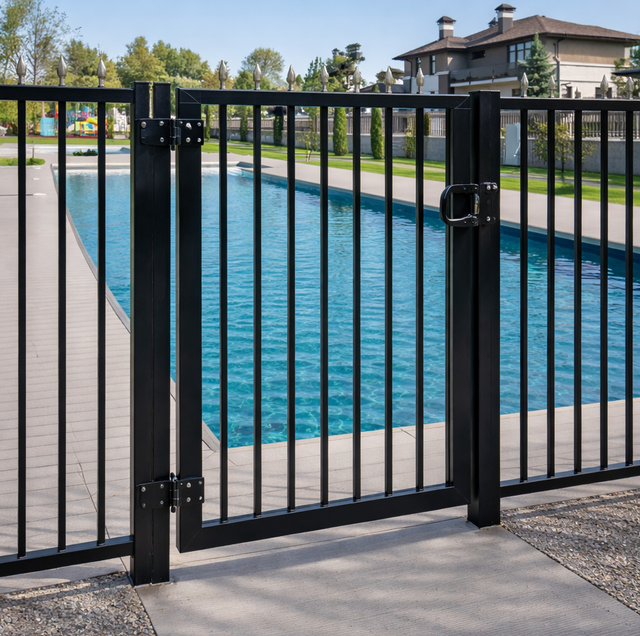
Quick Answer: A pool safety gate must do two separate jobs automatically: self-close (a hinge or spring pulls it fully shut from any open position) and self-latch (the latch engages every time without being pushed or lifted by hand). Reliable performance comes from the right self-closing hinge, a latch that catches on contact, correct latch height and placement on the pool side, an outward swing away from the water, and square alignment so the gate never sags or drags. It is life-safety hardware, tested regularly, never propped open.
A pool gate has one duty that never takes a day off: it must return to closed and stay closed on its own, without a person remembering to push it. That single behavior stands between a curious toddler and open water. A gate that looks fine, swings freely, and even drifts shut can still fail the only test that matters: whether the latch actually caught the last time someone walked through.
Self-Closing And Self-Latching Are Two Different Jobs
People treat "the gate shuts by itself" as the whole safety story. It is only half. Closing and latching are two distinct actions, handled by two different pieces of hardware, and a gate can pass one while failing the other.
Self-closing means the gate travels from any open angle back to the frame with no help. Self-latching means that once the gate reaches the frame, the latch mechanism engages and holds, so the gate cannot be pulled or nudged back open. A gate can swing shut beautifully and then bounce a quarter inch off the strike and sit there unlatched. To a passing adult it reads as closed. To a small child leaning on it, it opens.
The reliability of both jobs comes down to a short list: the closing device, the latch itself, where that latch sits, which way the gate swings, and whether the whole assembly stays square over time. Get those right, and the gate does its job whether anyone is watching or not.
How The Closing And Latching Mechanism Works
Before the specific parts, it helps to see the sequence the hardware runs through every single time the gate is used.
Someone opens the gate and lets go. A self-closing hinge stores energy when the gate is pushed open, through a spring, a tensioned cartridge, or a cammed gravity design, and releases that energy to drive the gate back toward the frame. As the gate nears closed, its leading edge meets the latch. On a good latch, the strike rides up a ramped tongue or draws a spring-loaded bolt into a catch, and the moment the gate is fully home, the latch drops or snaps into place and holds.
The whole point is that no human step lives in that sequence. The person only opens the gate. The hardware closes it and locks it. If any part of the chain depends on someone pushing the gate the last few inches or flipping a latch by hand, the gate is not a pool safety gate. It is a regular gate that happens to swing shut.
A pool gate is closer to a fire door than to a garden gate. A fire door is engineered to fall shut and latch on its own precisely because the moment it is needed most is the moment no one is thinking about it. A pool barrier follows the same logic: it protects during the unwatched second, not the watched hour.
Self-Closing Hinges That Pull The Gate Fully Shut
The closing device is the muscle. Three common types do the work.
Spring-loaded hinges: A coiled spring inside the hinge barrel is wound tighter as the gate opens and unwinds to pull it closed. Most are adjustable, so the closing force can be tuned enough to overcome the latch's resistance and a bit of wind without slamming.
Gravity or cammed hinges: These use angled surfaces so that opening the gate lifts it slightly, and gravity brings it back down and closed. There is no spring to weaken, which makes them steady over long service, though they need to be hung dead-level to close consistently.
Tension-cartridge closers: A sealed hydraulic or spring cartridge, similar to a storm-door closer, controls both the pull and the speed, so the gate closes firmly but does not bang the frame hard enough to bounce back off the latch.
Whichever type is used, the test is the same: released from any position, including barely cracked and fully swung wide, the gate must travel all the way to closed with enough authority to seat the latch. A gate that closes from wide open but stalls when nudged from an inch away has a weak or worn closer and is not safe.
A Latch That Catches Every Time On Its Own
The latch is where safety is won or lost, because closing without latching is the more dangerous failure: it looks solved when it is not.
Two designs dominate on pool gates. A magnetic latch uses a magnet in the gate to pull a spring-loaded pin into a catch as the gate arrives, so there are no fine parts to align by eye, and it tolerates a little play. A spring-loaded mechanical latch uses a ramped bolt that rides over the strike and drops into place. Both are built to engage on contact, without a hand.
What makes either one reliable is that it does not need a run-up or a perfect push. Test it by letting the gate close from a gentle release, not a shove. If it only latches when swung hard, the closer, the alignment, or the latch itself needs attention, because in real life the gate will often drift closed slowly.
Latch Height And Placement Keep It Out Of Small Hands
Where the latch lives matters as much as how it works.
The release is mounted high, well above a young child's reach, so a toddler cannot stretch up and pop it. On many barriers, the operating mechanism sits near the top of the gate, and the latch is arranged so the release faces the pool side, meaning a child on the outside cannot reach through or over the gate to trip it. Some latches add a shroud or a raised collar so the mechanism cannot be worked from underneath or through the gate's gaps.
The exact heights and reach rules are set locally and vary by jurisdiction and, in many neighborhoods, by an HOA. Confirm the requirement for the specific property before finalizing the install rather than assuming a number, because a latch mounted an inch too low or on the wrong face can quietly void the barrier's whole purpose.
Swing Direction And Square Alignment Do The Quiet Work
Two structural choices decide whether all that hardware gets a fair chance.
The gate swings outward, away from the pool: An outward swing means a child pushing against the gate from the pool side pushes it into the frame and the latch, not away from it. It also keeps the closing hinge working with the geometry instead of fighting it.
The gate hangs square and never sags or drags: This is the most common reason a good latch stops catching. If the gate settles, the hinges loosen, or a post shifts, the leading edge drops. Now the strike no longer lines up with the catch, and the gate closes to a spot just shy of latched. A dragging gate is worse: friction on the ground steals the closer's energy, so it stops before it seats. Square hinges, solid posts, and a small deliberate gap at the latch edge are what let the mechanism land in the same place every time.
Alignment is not a set-and-forget item. Posts move with ground moisture swings and seasonal soil changes, and that shift happens year-round, not only in one season, so the fix is periodic checking rather than a single adjustment at install.
Never Propped Open, Always Tested
Two habits carry the whole system.
A pool gate is never propped, blocked, wedged, or tied open, not for a party, not while carrying pool toys, not just for a minute. Every one of those minutes is when the barrier is needed. If the gate hesitates, stops short, or fails to latch even once, it is out of service until it is fixed.
The gate is tested on a schedule because hardware drifts. A quick routine: open the gate a few inches and let go, and confirm it closes fully and the latch clicks home without a hand; repeat from wide open; then push gently on the closed gate to confirm the latch holds. Do this often, and after any storm, bump, or ground movement. If the gate hesitates, stops short, or fails to latch even once, it is out of service until it is fixed. There is no acceptable failure rate on a pool barrier.
Frequently Asked Questions
Run three checks with the gate at rest. Open it just a few inches and let go: it must swing shut and latch on its own, since a small child rarely opens a gate wide. Repeat from halfway, then from fully open, because a weak closer often latches from a wide swing but stalls short from a small push. Finally, push inward on the closed gate to confirm the latch actually caught and did not just rest against the strike. Do this seasonally and after any hinge or closer adjustment, and listen for the latch to click home rather than trusting a closed-looking gate.
Not by default. Many general-purpose closers are tuned for convenience and will let the gate rest slightly open or close too gently to seat a pool latch. Pool-rated closers are specified to deliver enough force to overcome the latch spring from any position, and their strength is often adjustable so it can be set above the latch's resistance plus a wind margin. The deciding factor is whether the gate reliably latches from a slow, hands-off close, not whether it merely drifts toward the frame.
Test it monthly at minimum, and again after anything that could shift alignment: a heavy storm, someone leaning or climbing on it, a vehicle bump near the post, or seasonal ground movement. A useful rule is to test whenever the gate feels even slightly different to open. Because a latch can start failing intermittently before it fails completely, a monthly hands-off close-and-latch check catches the drift while it is still a maintenance item rather than an open gate.
Almost always alignment. If the leading edge has dropped from hinge wear, a sagging frame, or a shifted post, the strike no longer meets the catch, and the gate stops a hair short of latched. A dragging bottom edge is another cause: ground friction absorbs the closer's energy before the latch seats. Wind can also stall a weak closer just shy of the catch. The fix is squaring the gate and restoring a clean latch-edge gap, not simply pushing harder each time.
The self-latch and a lock are different things. The self-latch is the automatic safety catch that engages on every close and needs no key. A keyed or combination lock is an added deterrent for older children who could otherwise reach and operate the release. For everyday drowning prevention, the automatic latch does the protecting, while a lock addresses intentional entry by someone tall enough to work the mechanism. The barrier should never depend on someone remembering to lock it.
Yes, and meaningfully. Latch height, which direction the gate must swing, the maximum gap under and beside it, and where the release must sit are all set by local jurisdiction, and many HOAs layer additional requirements on top. Two properties a few miles apart can face different specifics. Confirm the exact requirements for the address before hardware is chosen or mounted, since a barrier that meets a generic guideline but misses the local one can fail inspection and, worse, fail a child.
Have your pool gate checked before you trust it — a quick hardware and alignment review confirms it self-closes and self-latches every time. Sereno Custom Fence & Gates serves Phoenix and the Valley. Call (602) 353-7385.
