
Signs Your Wood Fence Posts Are Failing After Monsoon Season
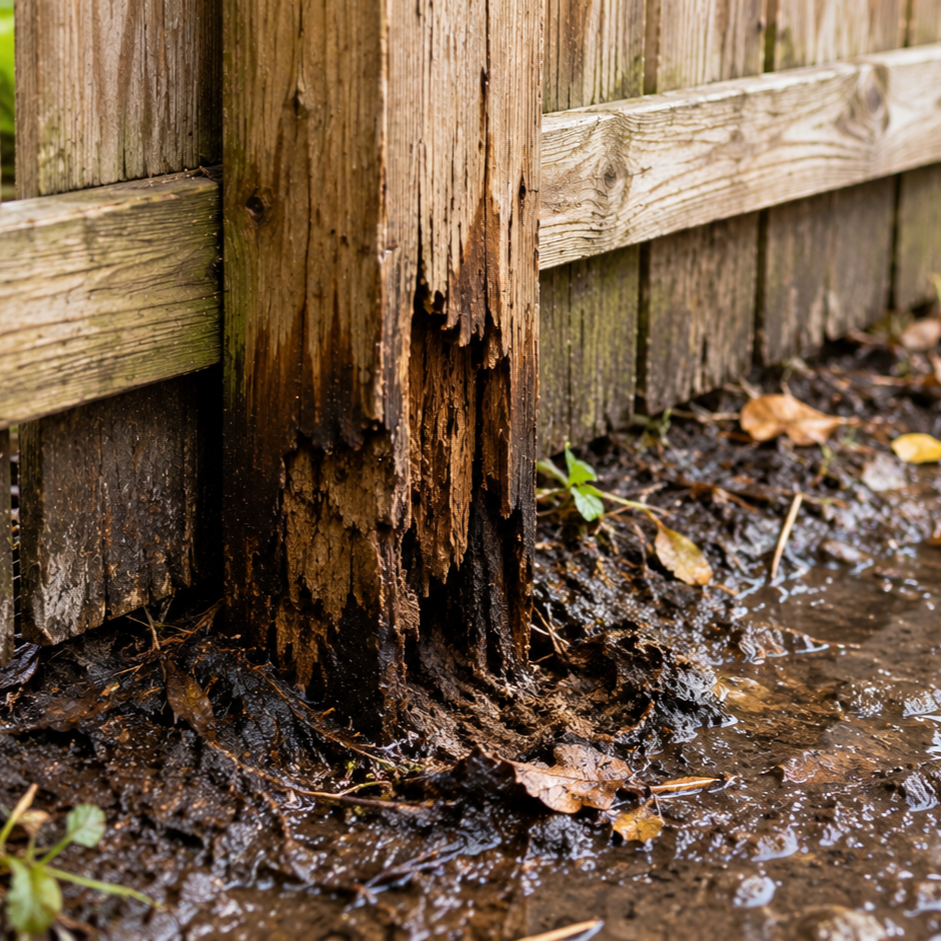
Quick Answer: After monsoon season, wood fence posts are the most likely part to fail, because they sit in the ground where moisture collects and rot starts. Warning signs include a post that wobbles, leans, or shifts when you push on it; soft, spongy, or crumbling wood at or just below the ground line; a fence section that's sagging or tilting; posts that have heaved or settled as the soil moved; and visible rot, cracking, or discoloration near the base. Posts fail at ground level first because that's where wood meets wet soil. Catching failing posts early matters because they hold up the whole fence, and one bad post can drag a section down.
Monsoon season is hard on a wood fence, and the part that takes the worst of it is usually out of sight: the posts, where the wood meets the ground. Heavy rain saturates the soil around the post bases, and that moisture is exactly what causes wood to rot and posts to fail. After the storms pass, it's worth checking your posts, because they're the foundation holding the whole fence up.
Why Posts Fail First
A wood fence post does the hardest job and lives in the harshest spot. It's set into the ground to anchor the fence, which means the base of the post sits in soil that holds moisture — and after monsoon rains, that soil gets saturated. Wood that stays wet, especially in contact with damp earth, is prone to rot. So the post base, right at and just below the ground line, is the first place rot takes hold and the first part of the fence to fail. The rails and pickets above may look fine while the posts beneath are quietly deteriorating, which is why posts deserve a specific check after a wet season.
Sign One: Wobbling, Leaning, or Shifting Posts
The most telling sign of a failing post is movement. A sound post is firmly anchored and doesn't budge; a failing one wobbles, leans, or shifts when you push on it. Give your posts a firm push and a wiggle — if a post moves at the base, rocks in the ground, or has started to lean, its anchoring or the wood at the base has been compromised. Movement means the post is no longer doing its job of holding the fence rigid, and it tends to worsen as the wood weakens further or the soil stays loose.
Sign Two: Soft, Spongy Wood at the Base
Rot reveals itself by texture. Sound wood is firm; rotting wood is soft, spongy, or crumbly. Check the post at and just below the ground line — press it, or probe it with a screwdriver. If the wood gives, sinks, flakes, or crumbles, rot has set in. This ground-level rot is the classic monsoon-season failure, because that's where moisture concentrates. Soft wood at the base means the post is losing the strength it needs to stand and support the fence, even if the wood higher up still looks solid.
| Sign | What it indicates |
|---|---|
| Post wobbles or leans when pushed | Failing anchoring or rotted base |
| Soft, spongy, crumbling wood at base | Rot from ground moisture |
| Fence section sagging or tilting | Post no longer supporting it |
| Post heaved up or settled | Soil movement from saturation |
| Cracks, rot, or discoloration near base | Deterioration underway |
Sign Three: Sagging Sections and Soil Movement
Because posts hold up the fence, a failing post often shows in the fence sections it supports. A section that's sagging, tilting, or pulling away can mean the post anchoring it has weakened. Monsoon moisture also moves soil: saturated ground can shift, causing posts to heave upward or settle, which throws the fence out of alignment. So a fence that's suddenly uneven, leaning, or sagging after the storms — even if you can't immediately see the rot — points toward post problems at the base. The visible sag is often the first thing people notice before they check the posts themselves.
Why It Matters and What to Do
Failing posts are more than a cosmetic issue because the posts are the structural foundation of the fence. A rotted or loose post can't hold its section firmly, and as it deteriorates, it can let the fence lean, sag, or eventually fall — and one failing post can drag down or destabilize the sections around it. Catching post failure early, after the monsoon season, lets you address it before a section collapses, often by replacing the failed posts and re-anchoring them properly. Because the rot is usually below ground and replacing posts involves the fence's structure, it's worth having failing posts assessed and repaired by a fencing professional, who can also address drainage or anchoring methods that help posts resist moisture going forward.
After the monsoon, walk the fence and push firmly on each post. The ones that wobble, lean, or have soft wood at the base are your failing posts. Checking right after the wet season catches the damage while it's contained, before the next storms or the dry heat finish off a weakened post.
Frequently Asked Questions
Because the posts sit in the ground, where monsoon rains saturate the soil around their bases. Wood that stays wet in contact with damp soil is prone to rot, so the post base at the ground line is the first place to deteriorate. Heavy rain also moves saturated soil, which can shift posts. That's why posts are the most likely part to fail after a wet season.
Check the wood at and just below the ground line. Sound wood is firm; rotting wood is soft, spongy, or crumbly. Press or probe the base with a screwdriver — if it gives, sinks, or flakes, rot has set in. Movement is another sign: a post that wobbles or leans when pushed has likely been compromised at the base. Ground-level softness is the classic indicator.
Often, because a post supporting that section has failed. A rotted or loose post can't hold its section firmly, so the fence leans, sags, or pulls away. Saturated soil from monsoon rains can also cause posts to heave or settle, throwing the fence out of alignment. A suddenly uneven or sagging fence after storms points toward post problems at the base.
Usually, the failed post is replaced and re-anchored properly, rather than repaired, since the rot is typically below ground and the post's strength is gone. The surrounding sections can often be saved if caught early. Because the work involves the fence's structure and below-ground anchoring, and addressing drainage helps prevent recurrence, it's best handled by a fencing professional.
A single failing post can affect more than its own section. Because posts anchor the fence, a rotted or loose post lets its section lean or sag, which can pull on and destabilize the neighboring sections too. One bad post left unaddressed can drag down or strain the fence around it, which is why catching and replacing failing posts early helps protect the rest of the fence.
Proper installation and drainage make a big difference — anchoring posts well and ensuring water drains away from the bases rather than pooling around them helps posts resist the moisture that causes rot. Using appropriate post materials and protection also helps. A fencing professional can recommend anchoring and drainage methods suited to a monsoon climate to extend the life of the posts.
Check the Posts the Storms Leave Behind
After the monsoon season, your wood fence posts are the part most likely to be quietly failing, because they sit in the saturated soil where rot begins. Wobbling or leaning posts, soft wood at the base, and sagging sections are the signs to look for. Because the posts hold up the whole fence, catching their failure early — before a section collapses — is what protects the rest. A firm push on each post after the rains tells you which ones need attention.
Worried your fence posts took a beating this monsoon? — Get them checked for rot and movement and re-anchored before a section falls. Sereno Custom Fence & Gates serves Phoenix and the Valley. Call (602) 353-7385.
