
Block Wall vs Wood Fence: Which Wins on Privacy?
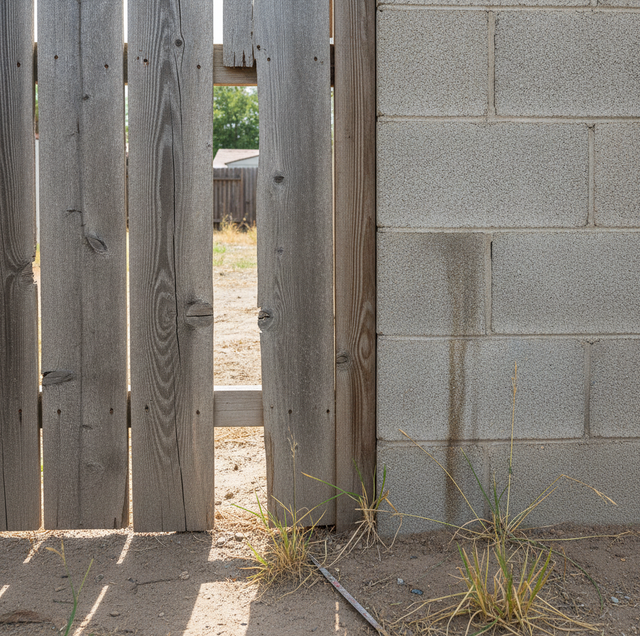
Quick Answer: A solid block wall gives you a quieter, longer-lasting, wind-steady privacy barrier and near-zero upkeep, but costs more effort to build and reads as hard, painted mass. A wood fence goes up faster, brings natural warmth and easy color changes, and is simpler to modify, but it grays, checks, and gaps under the sun and needs sealing every few years. Many yards do best with a hybrid: a block base or block pilasters carrying wood or iron infill.
You step into the backyard with a cup of coffee and hear the neighbor's dog, a car door two houses down, and the low churn of a pool pump you can see straight over the top of. The yard is open in a way you didn't sign up for. The fix is a privacy barrier, and in a hot, dry climate, that decision almost always comes down to two materials: a poured-footing masonry block wall or a wood fence. They both make a yard private on day one. Where they part ways is everything that happens after day one, which is the part worth thinking through before anything gets built.
What Actually Blocks a View and a Sound
Privacy has two halves: what you can see and what you can hear. A solid concrete masonry unit (CMU) wall, grouted and finished, is a continuous mass with no gaps by design. It stops sightlines completely and, because sound blocking depends mostly on the sheer weight and density of the barrier, that mass also knocks down noise in a way a lighter fence can't match. Dense material reflects and absorbs sound energy; a thin panel just passes it along.
A wood fence starts out just as private. Board-on-board or tight-picket construction blocks the view fully the day it goes up. The difference shows later. Wood is a living material that swings with humidity, and in a dry climate, the boards give up moisture and shrink across their width. As they shrink, the seams between pickets open into thin vertical gaps, and the fence that was solid in spring is striped with daylight by the following year. You still have a fence; you have slightly less privacy than you paid for, and the gaps let sound and sightlines leak through.
Longevity in Intense Sun
This is where the two materials separate most sharply. Masonry doesn't rot, doesn't feed termites, and doesn't have a surface that UV can chemically break down the way it does wood. A properly built block wall is measured in decades. The paint or stucco on it fades and needs refreshing, but the wall itself just stands there.
Wood is on a clock; the sun sets. Intense, year-round ultraviolet light degrades lignin, the natural binder in the wood's surface, which is what drives bare wood to gray. The same drying that grays the surface also makes boards check (those fine surface cracks), cup, and warp, and pulls the pickets apart at the seams. Heat and constant day-night temperature cycling work the fasteners and rails loose over time. None of this is a defect in the wood; it's what any organic material does under a heavy UV dose and wide temperature swings. Sealing and staining slow it dramatically, but they don't stop the clock, and a neglected wood fence in strong sun ages fast.
Standing Up to High Wind
A tall privacy fence is, aerodynamically, a sail. When a downburst or a dust-storm gust hits a solid six- or seven-foot wood fence, the whole face catches the wind and dumps that load onto the posts and their footings. If the posts weren't set deep enough, or the footings are undersized, the fence leans or goes over. Wood's saving grace is that it's lighter, so a well-built one with deep, properly concreted posts holds up fine, but the taller and more solid the wood fence, the more the wind wants it.
A block wall handles the same gust very differently. Its weight works in its favor, and a wall built on a continuous footing with vertical rebar and grouted cells behaves as one rigid, anchored unit. Think of the difference between pushing on a bookshelf and pushing on a filing cabinet full of files: the mass and the anchoring are what keep it planted. That resistance is exactly why block walls are common along exposed property lines in wind-prone areas.
What Each One Asks of You Over Time
Maintenance is the quiet cost that runs for as long as you own the barrier. A block wall asks for very little: watch for the occasional hairline crack (usually from soil movement) and patch it, deal with efflorescence (the chalky white mineral bloom that can surface on masonry) if it shows, and repaint or re-stucco when the color tires. Years can pass between any of it.
Wood is an ongoing relationship. To hold its color and slow sun damage, a wood fence needs re-sealing or re-staining every few years, and horizontal surfaces like rail tops and post caps fade first because they receive the most direct overhead sun. Over a longer span, you'll swap out an individual rail or picket that's warped, split, or rotted at the base where it meets damp soil. The upside is that this is simple, forgiving work you can do a section at a time.
The Build Itself, and the Look It Leaves
Installation is where wood wins on speed and flexibility. A wood fence is lighter, faster to put up, and easier to modify later: move a gate, cut in a wider opening, or extend a run without much drama. A block wall is heavier work. It needs a proper footing, vertical rebar tying the wall to that footing, and grouted cells. In this soil, the footing has to extend below the troublesome layers. That's more labor, more cure time, and far less "change it next weekend" flexibility once it's set.
The finished look pulls in opposite directions, too. Wood brings a natural, warm texture, and, because it takes stain and paint readily, you can recolor it whenever your taste or your house changes. Block reads as solid, architectural mass; you dress it with paint, stucco, or a decorative slump-block finish rather than changing its character on a whim. Neither is "better" here. It's a genuine style fork between soft and natural versus hard and permanent.
Block vs Wood at a Glance
| Driver | Solid Block Wall | Wood Fence |
|---|---|---|
| Privacy (sight) | Complete, permanent, no gaps | Complete at first; gaps open as boards shrink |
| Sound blocking | Strong mass reflects and absorbs noise | Moderate; weakens as seams open |
| Longevity in the sun | Decades; no rot, termites, or UV breakdown | Grays, checks, warps; slowed by upkeep |
| High wind | Excellent when footed and reinforced | Good if posts are deep; the taller/solider, the more sail |
| Maintenance | Occasional crack/efflorescence repair, repaint | Re-seal every few years; replace rails/pickets |
| Install | Footings, rebar, grout; heavy, slower, hard to modify | Faster, lighter, easier to change |
| Look | Solid mass; paint, stucco, or slump finish | Natural warmth; easy color changes |
| Soil demands | Footing depth matters in caliche/expansive soil | Post footings matter, but are less critical |
You Don't Have to Pick Just One
The two materials aren't rivals so much as parts you can combine. A common answer is a hybrid: a low block base or full block pilasters (the columns) carrying wood or wrought-iron infill panels between them. You get masonry's wind resistance, ground-contact durability, and a maintenance-free lower section that never sits in wet soil, plus the warmth or the see-through openness of the infill up top. Another split is by zone: a solid block wall along the property line where privacy, noise, and wind matter most, and lighter wood fencing to divide interior areas like a garden bed or a dog run. Matching the material to the job each stretch of fence actually does is often smarter than committing the whole yard to one.
Frequently Asked Questions
Block, clearly, and the reason is physics rather than preference. Sound reduction through a barrier tracks with its mass per square foot, so a dense, grouted masonry wall cuts far more noise than any wood fence of the same height. To squeeze the most quiet out of a wall, height helps (a taller barrier blocks more of the sound's path), a solid grouted core beats a hollow one, and eliminating gaps at the bottom matters because sound sneaks through openings the way water does. Wood can take the edge off, but it won't rival mass.
Generally, yes, and it comes down to height and structure. Because a block wall is a heavy structure sitting on a footing, walls above a certain height, or any wall doing retaining work, typically need a permit and an engineered footing detail so the base is sized for the load and the soil. Shorter, freestanding garden walls are often simpler. A tall privacy wood fence can trigger a permit for height, too, but it rarely needs the footing engineering a masonry wall does. The practical move is to confirm requirements for your height and lot before design, not after.
Yes, and it's one of the cleaner hybrids. The usual method is to embed steel post anchors or sleeves into the block wall's grouted cells or bond beam while it's built, then set the wood posts into those anchors so the fence is tied to the masonry rather than just resting on it. That keeps the wood posts up out of ground moisture, which is exactly where wood fences tend to rot first, and it lets the solid base take wind load. Retrofitting posts onto an existing wall is possible with surface-mount brackets and anchors, but designing the connection in from the start is stronger.
Deeper and wider than a lot of homeowners expect, because the footing has to reach past the layers that cause trouble. Caliche, a cement-hard mineral layer common in some soils, is tough to dig through but can make a solid bearing surface once you're through or into it. Expansive soils are the opposite problem: they swell when wet and shrink when dry, so a footing has to be deep and stiff enough that this heave doesn't crack the wall. Exact dimensions depend on wall height and a soil assessment of your lot, which is part of why taller walls get an engineered footing detail rather than a rule of thumb.
It can, and it's worth sorting out before anyone breaks ground. A barrier built right on a shared boundary is often treated as a shared structure, which can mean splitting the build and the upkeep with the neighbor, whereas a fence set fully inside your line is unambiguously yours to fund and maintain. Beyond dollars, a shared wall means decisions about height, finish, and repairs involve two households, and an HOA may weigh in on materials or color. A written understanding with the neighbor up front prevents most of the friction. This is a neighborly and, at times, legal matter, so treat specifics as something to confirm for your situation, not assume.
They handle different demands. For a pool enclosure, the priority is a non-climbable barrier with no toe-holds and a self-latching, self-closing gate, and a smooth block wall gives kids nothing to scale while offering full privacy; wood's horizontal rails can act like a ladder unless the fence is designed to keep them on the inside. For dogs, block wins on the diggers and the barkers: its base doesn't give at ground level the way a dug-under wood picket can, and it doesn't turn into a chew surface, while its mass also muffles the neighbor sounds that set a dog off. Wood can absolutely work for both, but each use has details worth building around.
Book a free on-site consultation to compare a block wall, wood fence, or a hybrid for your yard — and get a barrier matched to your privacy, wind, and upkeep priorities. Sereno Custom Fence & Gates serves Phoenix and the Valley. Call (602) 353-7385.
