
Aluminum vs. Steel for a Commercial Security Fence
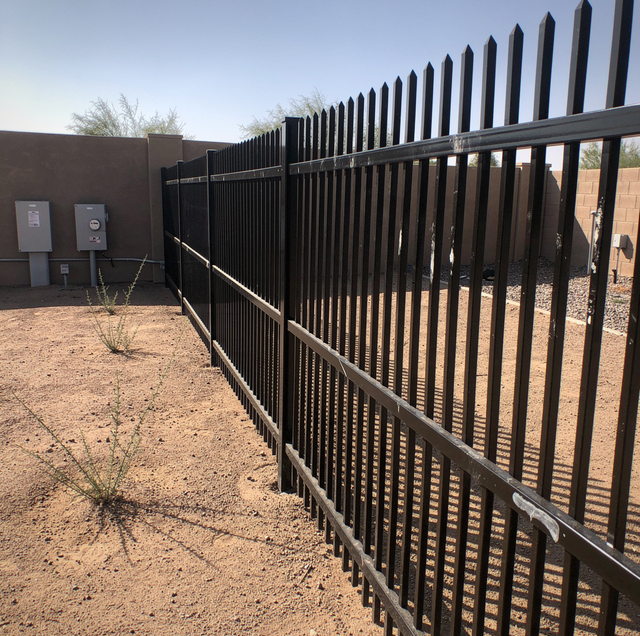
Aluminum and steel resist a bolt cutter differently, corrode differently, and ask for different footings once they're in the ground, and no single one of those differences settles the question on its own. On a commercial security fence, the choice actually comes down to five separate comparisons, weighed against whichever risk the property needs to resist first.
Step 1: Define What The Fence Actually Needs To Resist
Not every commercial property needs the same level of protection. Deterrent fencing signals a boundary and slows casual trespass without necessarily resisting a determined attempt for long; that's often enough for a landscaped business park or an office campus perimeter. Delay-rated fencing is built to resist cutting and climbing tools for a measured stretch of time, which matters more around an equipment yard, a utility substation, or any site storing something worth a planned theft attempt rather than an opportunistic one. Getting this step right first changes which of the comparisons below actually matter for a given property. A site with a mix of both needs, a public-facing entrance and a fenced storage yard behind it, often ends up with two different answers rather than one uniform standard applied everywhere.
Step 2: Compare Structural Strength
Steel offers higher tensile strength per cross-section, which is why heavy-gauge welded panels or tubular steel pickets remain the standard for higher-security applications. A cut or pried steel section shows a clear breach point, since the metal visibly deforms under stress before it fails outright, making the damage obvious on inspection. Aluminum fencing uses extruded picket profiles that are considerably lighter, typically reinforced with internal ribbing to approach steel's rigidity without steel's weight. The tradeoff is that aluminum yields, meaning it bends, under a sustained impact rather than resisting the way steel does, so a determined attempt with a pry bar defeats an aluminum picket more readily than a steel one of similar size.
Step 3: Compare Corrosion Handling
Steel needs a protective layer to hold up outdoors long-term, typically hot-dip galvanizing or a powder coat applied over a galvanized substrate, since bare steel rusts from the surface inward and any breach in that coating becomes a starting point for corrosion to spread. Aluminum forms its own thin oxide layer when exposed to air, and that layer is self-healing when scratched, which means aluminum resists corrosion without any coating at all. The same softness that makes aluminum corrosion-resistant also means it marks and scratches more easily than steel during installation and everyday contact.
Step 4: Compare Installation And Footing Demands
Steel panels and posts weigh considerably more per linear foot than aluminum, which translates directly into deeper, larger-diameter footings needed to resist both the structural load and wind pressure against a solid panel section. Heavier components also mean more labor and equipment to set posts plumb and keep them there. Aluminum's lighter weight allows smaller footings and faster panel installation, an advantage worth knowing on a site where underground utilities limit how deep a crew can safely excavate along the fence line.
Step 5: Compare Long-Term Security Performance
Steel remains harder to defeat with hand tools, bolt cutters, or a pry bar throughout the fence's working life, provided the protective coating is maintained. Aluminum is easier to bend or pry at an individual picket but doesn't lose that baseline resistance to rust-driven weakening the way an under-maintained steel fence eventually can; a steel fence with active corrosion at the base can actually become easier to breach years into its life than it was on installation day, which isn't true of aluminum's self-forming oxide layer.
How Each Material Behaves During An Actual Cutting Attempt
Bolt cutters and reciprocating saws don't interact with aluminum and steel the same way. Steel's density means a cutting tool has to work through more material resistance per pass, which shows up as more time and effort for the same-size cut, and a heavier-gauge steel picket adds another full layer of resistance on top of that. Aluminum's lower density lets a cutting tool move through it faster, but aluminum's tendency to bend under pressure before it shears sometimes works in the opposite direction: a picket that bows away from a cutting tool rather than staying rigid against it can actually slow down a cut attempt in a way that's easy to underestimate, even though the material itself offers less raw resistance than steel.
Why Weld Quality Matters As Much As The Metal Itself
A panel's overall strength depends on its welds holding up as well as the base material does. A steel panel with a poor weld, incomplete penetration, or a joint that wasn't properly cleaned before welding can fail at that weld point well before the surrounding steel would give way, effectively creating a weak point regardless of how strong the picket material is elsewhere on the panel. Aluminum welding requires a different technique entirely, since aluminum conducts heat away from the weld pool much faster than steel does, and a welder without aluminum-specific experience is more likely to produce a weak or porous joint. That's one reason a fence's actual security performance depends heavily on who fabricated the panels, not solely on which metal was specified for the job. A panel manufactured in a controlled shop environment with consistent weld inspection tends to hold up more predictably than one welded on-site under field conditions, which is worth asking about regardless of whether the specification calls for aluminum or steel.
Aluminum vs Steel: Side-by-Side Comparison
| Attribute | Aluminum | Steel |
|---|---|---|
| Weight per linear foot | Lower | Higher |
| Corrosion resistance | Self-forming oxide layer; no coating required | Requires galvanizing or powder coat maintenance |
| Cut/pry resistance | Moderate; yields before failing outright | Higher; resists deformation longer |
| Footing and installation demand | Smaller footings, faster install | Larger footings, heavier equipment needed |
| Long-term security if coating is neglected | Unaffected by coating condition | Can weaken at corrosion points over time |
| Typical application | Perimeter or deterrent fencing, lighter-duty security | Delay-rated security, equipment yards, higher-risk perimeters |
What This Looks Like Applied To A Real Perimeter
A property with a mixed-risk layout, an office entrance facing the street and a fenced storage or loading area behind it, doesn't need to pick one material for the entire fence line. The street-facing, high-visibility sections can use aluminum for its lighter weight and corrosion resistance, where the primary job is to define the boundary cleanly. The storage or loading section, where an actual theft attempt is more plausible, can run steel with a maintained coating, since that's where cut- and pry-resistance carries the most weight. Matching the material to the risk at each stretch of fence line, rather than defaulting to one material for the whole property, is usually the more effective use of the fence budget. That approach also simplifies future repairs, since a damaged steel panel section in the loading area gets replaced with matching steel rather than forcing a decision about whether to extend a single material choice to a section that never needed it in the first place.
What A Site Survey Actually Checks Before Recommending Either Material
A proper assessment starts with the ground itself: soil density and drainage at each stretch of the fence line, since a fence that looks identical on paper can need very different footings depending on whether it's going into dense clay or looser fill. Next comes an inventory of what's underground already: irrigation lines, utility conduits, or old footings from a previous fence, since that inventory can rule out a deeper steel footing in a spot where aluminum's shallower requirement still fits. Finally, a survey looks at how the property is actually used day to day: which sections see foot traffic, vehicle access, or after-hours activity, since that use pattern is what should drive where steel goes and where aluminum is a reasonable fit, rather than specifying one material uniformly before walking the site at all.
Frequently Asked Questions
Yes, through internal steel or reinforced-aluminum inserts inside the picket profile combined with closer picket spacing, though at that point the weight and installation advantages that make aluminum attractive in the first place mostly disappear, since the reinforced system approaches steel's weight and footing demands anyway.
Usually yes, for appearance more than protection: galvanizing alone holds up structurally but chalks and dulls outdoors over time, so most commercial steel fencing adds a powder coat over the galvanized layer to keep a finished look. The galvanizing keeps working underneath either way, since the zinc layer protects the exposed steel through sacrificial corrosion even if the powder coat above it gets scratched or chipped, rather than failing at the first coating breach the way bare painted steel would.
An annual walk of the perimeter checking for coating chips at welds, gate hardware contact points, and ground-level splash zones catches most corrosion starting points before they spread, since steel rusts fastest exactly where the coating is thinnest or has already been chipped away.
Generally yes, but the gate leaf itself, which absorbs repeated stress from an operator and hinge cycling far beyond what a static fence panel experiences, often gets a steel or reinforced frame even on an otherwise all-aluminum fence line, since the gate sees more mechanical stress than anything else on the perimeter.
Yes: looser or sandy soils need a wider footing to develop the same holding resistance as denser soil. In the Phoenix area, a hard caliche layer can work the opposite way, forcing a crew to break through it rather than simply dig deeper, regardless of which material's posts are going in. Either soil condition affects steel more than aluminum, since steel posts transmit a heavier load into the same footing.
Yes, and it's a common approach: steel for higher-risk sections like equipment yards or loading areas, aluminum for lower-risk decorative or boundary sections. The detail worth planning for is the transition point itself: whichever post carries the seam between materials needs a footing sized for the heavier of the two sections meeting there, and matching the finish color across both metals helps the switch read less like an obvious seam along an otherwise continuous fence line.
Match the material to the risk at each stretch of the fence line: steel where cutting and prying resistance matter most; aluminum where a clean boundary and easier footing matter more. A perimeter built section by section that way holds up better than one built around a single material picked before anyone walked the site.
Get a commercial security fence assessed for the right material and footing spec — a technician can evaluate risk level, soil conditions, and site access before recommending aluminum or steel. Sereno Custom Fence & Gates serves Phoenix and the Valley. Call (602) 353-7385.
