
Wrought Iron vs. Aluminum Fence: Which Holds Up in Heat?
Quick Answer: Both metal fences handle heat well structurally, but they differ in key ways. Wrought iron is extremely strong and substantial, offering a classic, high-security look, but it can rust if its protective finish is compromised and needs maintenance to prevent corrosion. Aluminum won't rust, is lightweight, and is very low-maintenance, making it durable and carefree in harsh climates, but it's less strong than iron. In extreme heat specifically, neither warps or degrades from heat the way some materials do, so the real differences are strength and security (favoring iron) versus rust resistance and low maintenance (favoring aluminum). The choice depends on whether you prioritize maximum strength or carefree durability.
For a metal fence in a hot climate, wrought iron and aluminum are the two leading choices, and they suit different priorities. Both withstand intense heat without the warping or breakdown that some materials suffer, so the decision comes down to other factors — chiefly strength, rust resistance, and maintenance. Understanding how each performs helps you choose the metal fence that fits your needs.
Heat Itself Isn't the Deciding Factor
First, the good news for a hot climate: both wrought iron and aluminum are metals that handle high heat well structurally. Unlike some fencing materials that can warp, soften, or degrade in intense sun and heat, neither iron nor aluminum is going to deform from the heat itself. So extreme heat alone doesn't rule out either one. That means the real differences between them — strength, corrosion resistance, and upkeep — are what should drive the choice, rather than heat tolerance.
Wrought Iron: Strength and Classic Looks
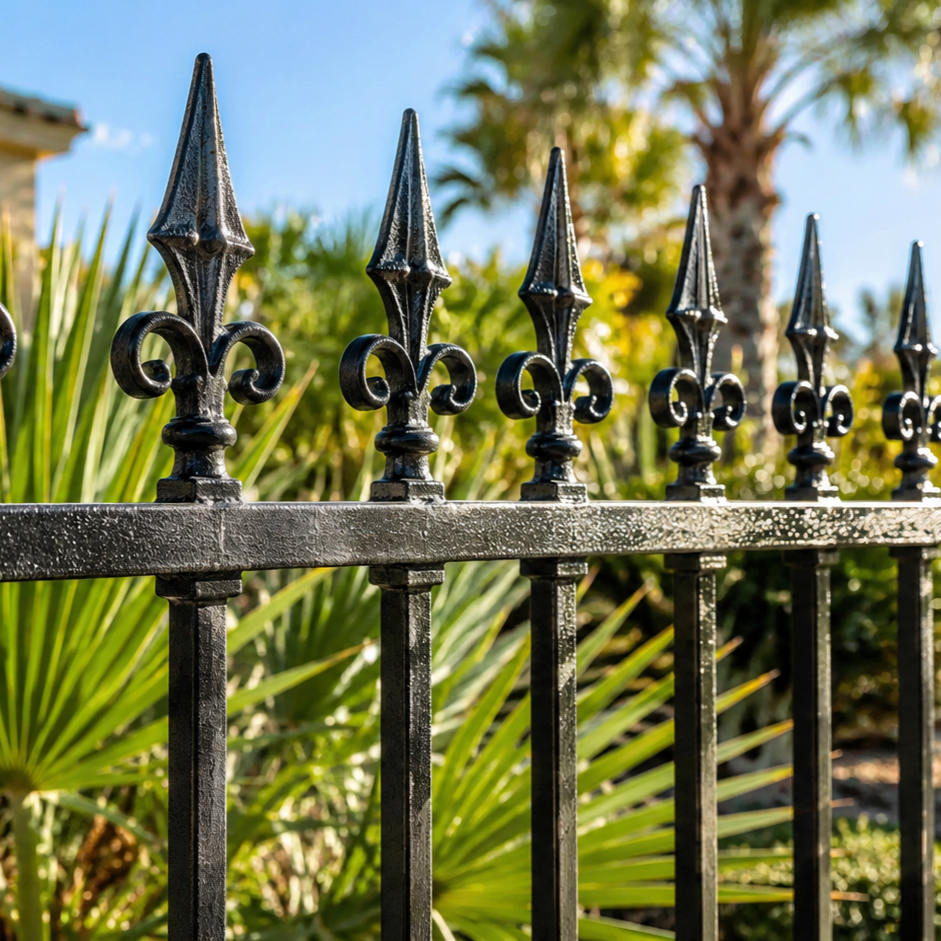
Wrought iron's biggest advantages are strength and appearance. It's a heavy, substantial, extremely strong material, which makes it excellent for security and durability — an iron fence is hard to breach and conveys a solid, permanent presence. It also offers a timeless, elegant, classic look that many homeowners prize, with the ability to be worked into ornate designs.
The trade-off is rust. Iron can corrode and rust when exposed to moisture if its protective finish — paint or powder coating — is compromised, scratched, or worn. In a climate with any moisture exposure (irrigation, occasional rain, humidity), that means iron needs maintenance: keeping the finish intact and addressing any rust to prevent it from spreading. So wrought iron rewards you with strength and beauty but asks for upkeep to fend off corrosion.
| Factor | Wrought Iron | Aluminum |
|---|---|---|
| Strength | Very strong, high security | Less strong, lighter |
| Rust | Can rust if finish fails | Won't rust |
| Maintenance | Needs upkeep to prevent rust | Very low maintenance |
| Weight | Heavy, substantial | Lightweight |
| Look | Classic, ornate, solid | Clean, can mimic iron |
| Heat tolerance | Handles heat well | Handles heat well |
Aluminum: Rust-Proof and Low-Maintenance
Aluminum's defining advantage is that it doesn't rust. Aluminum doesn't corrode the way iron does, so it sidesteps the main maintenance concern of a metal fence entirely. Combined with its lightweight nature, this makes aluminum very low-maintenance and carefree — it holds up in harsh climates, including around irrigation and moisture, without the rust upkeep that iron requires. Quality aluminum fencing also comes in styles that mimic the look of wrought iron, offering a similar appearance without the corrosion worry.
The trade-off is strength. Aluminum is less strong than wrought iron — it's lighter and not as heavy-duty, so it doesn't offer the same security and substantial feel. For most residential purposes, that's perfectly adequate, but where maximum strength and security are the priority, iron has the edge. So aluminum trades some of iron's brawn for freedom from rust and maintenance.
The Real Trade-Off: Strength vs. Carefree Durability
With heat off the table as a differentiator, the decision really comes down to strength and security versus rust resistance and low maintenance. Wrought iron offers maximum strength, security, and classic heft, but requires maintenance to prevent rust. Aluminum gives you rust-proof, low-maintenance, carefree durability at the cost of being less strong than iron. Neither is universally better — they serve different priorities. A homeowner who wants the strongest, most secure, most substantial fence and doesn't mind maintenance leans iron; one who wants a durable, attractive, hassle-free fence that never rusts leans aluminum.
Think about moisture exposure as much as heat. If your fence will be near irrigation, sprinklers, or any regular moisture, aluminum's rust-proof nature is a real advantage that saves ongoing maintenance. If maximum strength and a substantial, ornate look matter most and you'll keep the finish maintained, iron delivers that presence.
How to Choose
Choose wrought iron if your priorities are strength, security, and a classic, substantial, ornate appearance, and you're willing to maintain the finish and address rust to keep it in good shape over time. Choose aluminum if you want a durable, attractive, low-maintenance fence that won't rust and requires minimal upkeep, especially around moisture, and the somewhat lower strength is fine for your needs. Both handle extreme heat well, so let strength versus maintenance guide you. Consider your security needs, how much maintenance you'll do, and your moisture exposure. A fencing professional can show you both, including aluminum styles that capture the iron look, and help you choose for your climate and priorities.
Frequently Asked Questions
Both hold up well in extreme heat structurally — neither warps or degrades from heat the way some materials do. So heat itself isn't the deciding factor between them. The real differences are strength and security, where wrought iron leads, versus rust resistance and low maintenance, where aluminum leads. Choose based on those priorities rather than heat tolerance.
It can rust if its protective finish is compromised, scratched, or worn, and the metal is exposed to moisture, even in a mostly dry climate with irrigation, occasional rain, or humidity. Iron needs maintenance — keeping the finish intact and addressing any rust — to prevent corrosion. This upkeep is the main trade-off for iron's strength and classic look.
For most residential purposes, yes. Aluminum is less strong than wrought iron — lighter and not as heavy-duty — but it's perfectly adequate for typical residential fencing, security, and durability needs. When maximum strength and high security are top priorities, iron has the edge. But aluminum's strength is sufficient for most homes, and it trades some brawn for being rust-proof and low-maintenance.
Aluminum doesn't corrode the way iron does — it's naturally resistant to the rusting that affects iron when exposed to moisture. This is aluminum's defining advantage as a metal fence: it sidesteps the main maintenance concern entirely. That's why aluminum is so low-maintenance and carefree, holding up around irrigation and moisture without the rust upkeep that iron requires.
Yes. Quality aluminum fencing comes in styles designed to mimic the classic look of wrought iron, offering a similar elegant appearance without the corrosion worry. So if you like the iron aesthetic but prefer rust-proof, low-maintenance material, aluminum can give you a comparable look. Seeing the styles in person helps you find one that captures the appearance you want.
Aluminum, by a wide margin. Because it doesn't rust, aluminum requires minimal upkeep — essentially occasional cleaning — and avoids the rust prevention that iron needs. Wrought iron requires maintaining its protective finish and addressing any rust to prevent corrosion over time. If low maintenance is a priority, especially around moisture, aluminum is the clear choice between the two.
Strength or Carefree — That's the Real Choice
Both wrought iron and aluminum stand up to extreme heat without warping, so heat isn't what separates them. Wrought iron offers maximum strength, security, and classic substantial looks, but needs maintenance to prevent rust. Aluminum offers rust-proof, low-maintenance, carefree durability, at the cost of being less strong. Decide based on whether you value heavy-duty strength or hassle-free longevity — and factor in your moisture exposure and how much upkeep you'll do.
Choosing between an iron and aluminum fence for the heat — Get expert guidance on strength, rust, and the right fit for your home. Sereno Custom Fence & Gates serves Phoenix and the Valley. Call (602) 353-7385.
