
How Deep Should Fence Posts Be Set? The One-Third Rule
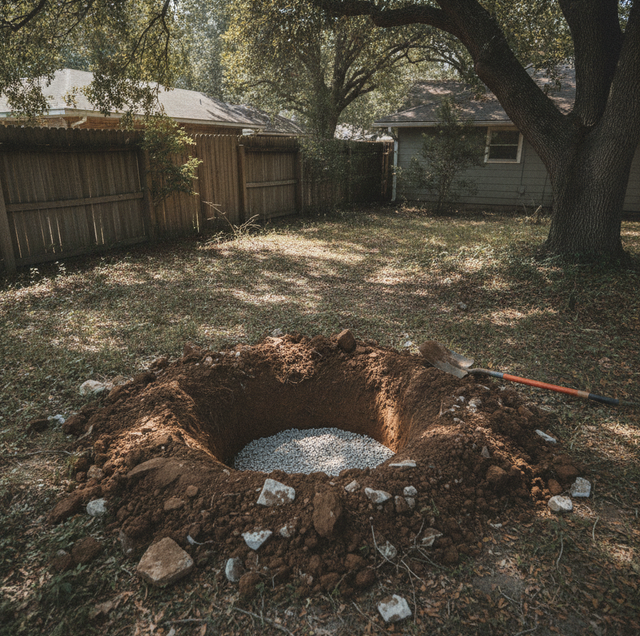
Quick Answer: Set a post about one-third of its above-ground height into the ground. For a standard 6-foot fence, that means a hole roughly 2 to 3 feet deep, plus a few inches of gravel at the bottom for drainage. Gate posts, corner posts, and end posts go deeper and wider than the line posts in between.
A fence is only as steady as the posts holding it up. Everything else, the pickets, the panels, the rails, the gate hardware, hangs off those buried verticals. When a fence starts to lean a season after it went in, or a gate begins to sag and scrape the ground, or a whole run tips over in a strong gust, the panels are almost never the reason. The posts were set too shallow, or too loosely, to do their job.
Getting the depth right is the single decision that separates a fence that stands straight for decades from one that needs propping up within a few years. The good news is that the rule for how deep to go is simple, and it holds across most fence types. The details, such as how wide the hole should be, when to go deeper, and what to put at the bottom, are where a fence earns its long life.
Why Depth Is What Holds a Fence Up
A fence post is a lever. The part above ground catches wind, leans against a gate, or takes the pull of a stretched run of fabric, and all of that force tries to pivot the post over at ground level. The part buried below ground is what resists that pivot. The soil packed around the buried section, together with the concrete or tamped fill in the hole, pushes back against the post and keeps it upright.
The deeper the post goes, the longer that buried lever arm becomes, and the harder it is for wind or load to tip it. A shallow post has almost nothing to fight back with, so it works loose, leans, and eventually walks its way out of the ground. That is the mechanism behind every rule that follows: depth buys holding power, and that anchoring is what keeps the fence standing.
The One-Third Rule of Thumb
The working guideline most fence builders reach for is to bury about one-third of the post's above-ground height. A 6-foot-tall fence uses posts long enough to sit roughly 2 to 3 feet in the ground. An 8-foot fence pushes that buried portion deeper still. Taller fences carry more wind load up high and need a longer buried anchor to balance it.
That one-third figure is a starting point, not a ceiling. Several factors nudge it deeper, and it is always safer to err on the side of more depth than less. Digging an extra few inches costs a little sweat up front; resetting a leaning fence later costs the whole post.
The buried third behaves like the root of a tree. The trunk you see sways in the wind, but the mass of roots spreading below the surface is what keeps the tree from toppling. Cut those roots short, and the tree comes down in the first real storm. Set a post too shallow, and it behaves the same way.
How Wide the Hole Should Be
Depth gets most of the attention, but hole width matters just as much. A common guide is to dig a hole about three times the width of the post. A 4-inch post wants a hole close to 12 inches across. A wider hole gives the concrete or tamped gravel a broader collar around the buried section, which spreads the load into more soil and grips the post more firmly.
A hole that is deep but narrow leaves the post standing in a thin sleeve of fill with little grip. It can rock back and forth in that tight channel and loosen over time. The wider collar is what turns a hole in the dirt into a proper footing.
When to Go Deeper Than the Rule
The one-third rule covers a typical straight run of line posts on a standard fence. Real yards throw in conditions that call for more depth, more width, or more concrete. A few of the common ones:
- Fence height: The taller the fence, the more wind it catches, and the longer the buried anchor needs to be. Height is the first thing to check.
- Wind exposure: A fence on an open, exposed lot takes far more push than one tucked between houses. More exposure means deeper posts and often more concrete.
- Soil type: Loose or sandy soil gives a post less to grip, so posts go deeper, and holes go wider to find purchase. Dense clay holds well but can swell and shrink with moisture, shifting posts if they sit too shallow.
- Frost, in cold climates: Where the ground freezes hard, posts are set below the local frost line so that freezing soil cannot heave them upward over the winter. In warm regions, this is far less of a concern; there, soil movement and wind are what drive the depth. Either way, the fix is the same: go deep enough that ground behavior at your site cannot lift or shove the post.
- Gate, corner, and end posts: These carry loads that the line posts never see, and they always go deeper and wider. More on why below.
Gate, Corner, and End Posts Take a Beating
The posts between the ends of a fence, the line posts, mostly just hold panels and resist wind. The posts at the stress points do much more, and they need much more anchor.
A gate post carries a swinging weight that yanks on it every time the gate opens and closes. Over thousands of cycles, that force will loosen an underbuilt post and start the gate sagging. Corner posts and end posts take the pull of the fence fabric or panels from one or two directions at once, a constant sideways tug that never lets up. For all of these, the answer is the same: dig deeper, dig wider, and use more concrete than you would for a line post. A gate that still swings level years later usually traces back to a gate post that was set like a footing, not like a fence post.
Setting the Post, Step by Step
The method matters as much as the numbers. A post set to the right depth but done sloppily can still fail. The sequence that works:
- Locate underground utilities first: Before any digging, call to have buried gas, electric, water, and communication lines marked. This is a free service in most areas, and it prevents a routine post hole from becoming a dangerous, expensive mistake. Never dig a fence line blind.
- Dig to depth and width: Aim for roughly one-third of the above-ground height in depth and about three times the post width across, deeper and wider at gates, corners, and ends.
- Add gravel at the bottom: A few inches of gravel under the post gives water somewhere to drain instead of collecting against the base.
- Set the post plumb: Stand the post in the hole and check it with a level on two adjacent faces so it is truly vertical, not just leaning close. Brace it so it holds still while you fill.
- Fill with concrete or tamped fill: Pour concrete around the post, or, in some soils and for some fence types, backfill in layers and tamp each one hard. Slope the top of a concrete collar slightly away from the post so water sheds off rather than pooling.
Rushed on any of these, and the depth alone will not save the post. Plumb, drainage, and a firm collar are what make the depth pay off.
Why Gravel Belongs at the Bottom
Those few inches of gravel are easy to skip and worth keeping. Its whole job is drainage. Water that seeps down the post finds the gravel and drains away through it instead of sitting in the bottom of the hole against the base of the post.
Standing water is what rots wood posts from the base up and rusts the bottom of metal posts, where you cannot see it. By giving that water an exit, the gravel slows both, so two identical posts set to the same depth can have very different lifespans depending on whether one is sitting in a puddle. It is a small step at the bottom of the hole that pays off years later.
Frequently Asked Questions
Set about a third of the post's above-ground height into the ground. A 6-foot fence uses posts buried roughly two to three feet. Because the one-third guideline scales with height, a taller 8-foot fence pushes the posts to around 3 to 3.5 feet deep to carry the extra wind load up top. The more post sits below ground, the harder wind and soil movement have to work to push it over.
Yes. A gate post carries a swinging weight that tugs on it every time the gate moves, and corner and end posts take the pull of the fence from two directions at once. Because they see loads the line posts never do, they are set deeper and in wider holes with more concrete than the regular posts between them. A gate post is also often stepped up in size, a 6x6 where the line posts are 4x4, so it can carry the swinging weight without racking or twisting over time.
A common guide is a hole about three times the width of the post, so a 4-inch post requires a roughly 12-inch hole. That extra width gives the concrete or tamped gravel a broad enough collar to grip the post and spread the load into the surrounding soil, which stops the post from rocking loose in a narrow channel. When you fill with concrete, pour it to fill the hole and crown the top slightly above grade, so water sheds away from the post instead of pooling at the collar.
A few inches of gravel under the post lets water drain away instead of pooling against the base. Around 3 to 4 inches of 3/4-inch crushed gravel is typical, which both drains the base and gives the post a firm, stable footing to bear on. That standing water is what rots wood posts and rusts metal ones from the bottom up, so draining it off means the post lasts longer, even when it is set to exactly the same depth as one sitting in a puddle.
Usually yes. A solid panel acts like a sail and catches far more wind than an open picket or wrought-iron fence, which lets air pass through. Because a privacy fence puts much more pressure on its posts, those posts are often set deeper and embedded in more concrete to resist the extra load a gust places on the wall.
It does. Loose or sandy soil gives a post less grip, so posts there go deeper and wider to find purchase. Dense clay holds well but can swell and shift as its moisture changes, and expansive clay may call for a bell-shaped hole, wider at the bottom than the top, so the footing resists being pushed up when the clay swells. In cold regions, posts are also set below the frost line so that freezing ground cannot push them up over winter, while in warm climates, wind and soil behavior drive the depth instead.
Get your fence posts set to the right depth the first time — a straight fence that stays straight for decades. Sereno Custom Fence & Gates serves Phoenix and the Valley. Call (602) 353-7385.
