
Fence, Guard Rail, or Bollards: What Your Commercial Property Actually Needs for Safety
Choosing the wrong solution can leave critical areas exposed or create unnecessary obstacles that disrupt operations.
Commercial property safety depends on more than warning signs and painted lines. Physical protection plays a central role in preventing accidents, limiting damage, and guiding both vehicles and pedestrians through shared spaces. Many property owners struggle to decide whether fencing, guard rails, or bollards provide the right level of protection. Choosing the wrong solution can leave critical areas exposed or create unnecessary obstacles that disrupt operations. Understanding how each option functions in real-world commercial environments helps property managers make informed decisions that improve safety without overbuilding or underperforming.
Rather than viewing fences, guard rails, and bollards as interchangeable barriers, professional planning treats them as tools designed for different risks. Each serves a distinct purpose, performs differently under impact, and affects how people move through a property. The most effective safety strategies often combine these elements strategically rather than relying on a single solution.
Understanding Safety Risks On Commercial Properties
Commercial properties host a wide range of activities that create overlapping safety risks. Delivery trucks navigate tight loading zones. Customers move unpredictably through parking areas. Employees cross vehicle paths during shift changes. Equipment and building infrastructure sit close to traffic lanes, where a single mistake can cause significant damage.
Many accidents occur not because of reckless behavior, but because boundaries are unclear or physical protection is missing. Drivers cut corners where no barrier exists. Pedestrians assume vehicles will stop. Equipment remains exposed because space feels open and accessible. Physical barriers remove ambiguity by making intended movement obvious and limiting the consequences of mistakes.
Safety planning begins by identifying where impact risk exists, where access must be restricted, and where guidance matters more than force. Fences, guard rails, and bollards address these needs differently.
What Fencing Does Best For Commercial Safety
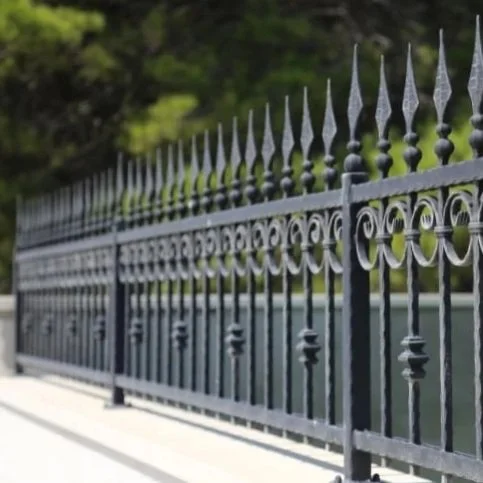
Fencing excels at defining boundaries and controlling access over a broad area. It communicates where people and vehicles should not go while allowing movement to funnel through designated entry points. Fencing works well along perimeters, between functional zones, and around sensitive areas that require restricted access.
From a safety perspective, fencing prevents accidental entry into hazardous spaces such as equipment yards, storage areas, or service corridors. It also keeps pedestrians out of vehicle-heavy zones where injury risk rises. While fencing is not designed to stop high-speed vehicle impacts, it significantly reduces the likelihood of vehicles entering areas where they should not be.
Fencing supports safety through visibility and organization. Open fencing allows clear sightlines that improve awareness, while privacy fencing blocks visual access where distraction or temptation increases risk. Gates integrated into fencing systems provide controlled access without leaving areas exposed. For large commercial properties, fencing forms the backbone of a comprehensive safety strategy.
How Guard Rails Protect Against Vehicle Impact
Guard rails serve a very different purpose than fencing. They exist to absorb and redirect vehicle impact rather than simply block access. In commercial environments, guard rails protect pedestrians, buildings, equipment, and infrastructure from accidental vehicle strikes.
Parking lots, warehouses, and industrial facilities rely heavily on guard rails to manage vehicle movement near critical areas. Guard rails prevent vehicles from mounting sidewalks, striking building corners, or colliding with utility equipment. Their low profile maintains visibility while providing strong physical resistance to impact.
Unlike fencing, guard rails are engineered to handle force. Steel construction and anchoring systems disperse impact energy, reducing damage severity. Guard rails perform best in predictable vehicle paths where accidental contact is likely, such as drive aisles, loading docks, and warehouse interiors.
Guard rails also play a role in traffic guidance. They subtly influence driver behavior by narrowing lanes and discouraging shortcuts. That guidance reduces confusion and lowers the chance of collisions in busy environments.
Where Bollards Provide Targeted Protection
Bollards focus on localized, high-risk protection rather than broad coverage. These vertical posts protect specific assets or access points from vehicle impact. Bollards appear simple, but their effectiveness depends heavily on placement, construction, and installation depth.
Commercial properties use bollards to protect storefront entrances, pedestrian walkways, fire hydrants, utility equipment, and access points where vehicles must stop. Bollards excel in areas where space constraints prevent longer barriers or where selective protection is required.
Unlike guard rails, bollards stop vehicles abruptly rather than redirecting them. That makes them ideal for protecting doors, columns, and equipment directly in the path of vehicles. Bollards also serve as visual cues, signaling drivers to slow down or stop.
Decorative bollards add an aesthetic element while still providing protection when properly engineered. In high-traffic public-facing areas, bollards balance safety and appearance effectively.
Comparing Coverage And Control
One of the biggest differences between fences, guard rails, and bollards lies in how much area they protect. Fencing covers large sections and defines overall movement. Guard rails protect linear paths where vehicles travel consistently. Bollards protect specific points of vulnerability.
Fencing controls access broadly by preventing entry into entire zones. Guard rails control movement by limiting vehicle deviation. Bollards control impact by protecting specific assets. Choosing the right option depends on whether the goal involves access restriction, collision prevention, or asset protection.
Many commercial properties require all three in different locations. A warehouse may use fencing around its perimeter, guard rails inside loading zones, and bollards near doors or equipment. Each element contributes to safety without duplicating function unnecessarily.
Pedestrian Safety Considerations
Pedestrian safety often drives barrier selection. Fencing keeps pedestrians out of dangerous areas entirely. Guard rails separate pedestrian walkways from vehicle lanes while maintaining visibility. Bollards protect crossings, entrances, and waiting areas where pedestrians congregate.
Choosing the wrong barrier can create new risks. Fencing that blocks sightlines may reduce awareness. Guard rails placed incorrectly may encourage pedestrians to step into traffic to bypass them. Bollards spaced too widely may fail to stop vehicles.
Professional planning evaluates pedestrian behavior patterns rather than assuming compliance. Barriers work best when they guide people naturally rather than forcing awkward detours.
Vehicle Behavior And Traffic Flow
Vehicle behavior plays a major role in safety design. Drivers follow the path of least resistance, especially in parking lots and service areas. Barriers that align with natural movement improve compliance without enforcement.
Fencing channels vehicles toward designated entrances and exits. Guard rails shape drive aisles and protect edges. Bollards force stopping or slowing at critical points. Together, these elements reduce confusion and improve flow.
Improper placement disrupts operations. Overuse of bollards creates clutter. Guard rails placed too close to drive lanes cause hesitation. Fencing that restricts the turning radius leads to collisions. Professional assessment prevents these issues.
Impact Resistance And Performance Differences
Impact performance varies significantly between these solutions. Fencing is not designed to stop vehicles and should not be relied upon for impact protection. Guard rails absorb and redirect force, reducing damage severity. Bollards stop vehicles directly, often preventing access entirely.
Understanding these differences prevents unrealistic expectations. Installing fencing where vehicle impact risk exists creates a false sense of security. Using bollards where redirection would be safer may increase damage. Selecting based on performance rather than appearance improves outcomes.
Installation Quality And Long-Term Reliability
Barrier performance depends heavily on installation quality. Fence posts must be properly set to resist leaning and sagging. Guard rails require correct anchoring depth and spacing to absorb impact effectively. Bollards demand deep foundations to prevent uprooting during collisions.
Poor installation undermines even the best materials. Shallow footings, incorrect spacing, or misalignment reduce effectiveness and create hazards. Professional installation ensures barriers perform as intended over time.
Maintenance also matters. Damaged guard rails and bent bollards should be repaired promptly to maintain protection. Neglected barriers send signals of poor management and increase risk.
Code And Compliance Considerations
Local codes influence barrier selection and placement. Fire access, ADA pathways, and visibility requirements affect fencing, guard rails, and bollards differently. Improper installation may violate setback rules or block required access routes.
In Phoenix, AZ, commercial properties must consider local regulations when installing safety barriers. Professional contractors navigate these requirements during planning, preventing costly corrections and delays.
Compliance also affects liability. Properly installed and approved barriers demonstrate proactive safety management, which matters during incident reviews.
Choosing What Your Property Actually Needs
The right safety solution depends on identifying risks honestly. Not every property needs all three barriers everywhere. Overbuilding wastes money and creates operational challenges. Underbuilding leaves vulnerabilities.
Professional evaluation examines vehicle speed, traffic volume, pedestrian density, asset value, and space constraints. Solutions are then matched to function rather than habit. Often, a combination approach delivers the best balance of safety, cost, and usability.
Safety planning should also consider future changes. Tenant turnover, increased traffic, or new equipment may alter risk profiles. Flexible designs allow adaptation without full replacement.
Why Professional Guidance Matters
Selecting between fencing, guard rails, and bollards requires more than visual preference. Professional contractors understand how these systems perform under real conditions. Experience reveals subtle risks that generic solutions miss.
Professional planning aligns safety goals with daily operations. Installation quality ensures barriers perform as intended. Long-term maintenance planning protects investment and reliability.
Safety becomes effective when barriers support behavior rather than fight it. Professional services turn safety infrastructure into a functional asset rather than an obstacle.
Long-Term Value Of Proper Safety Barriers
Well-chosen safety barriers reduce accidents, limit damage, and support smoother operations. Over time, fewer incidents mean lower insurance costs, less downtime, and improved reputation. Employees and customers feel safer navigating the property.
Investing in the right barrier for each risk zone delivers lasting value. Fencing, guard rails, and bollards each play an important role when applied correctly. Understanding their differences allows commercial properties to build safer environments without unnecessary complexity.
Commercial Safety Barriers FAQs
What is the main difference between fencing and guard rails?
Fencing controls access and defines boundaries, while guard rails are designed to absorb and redirect vehicle impact.
When are bollards the best safety solution?
Bollards work best for protecting specific assets, entrances, or pedestrian areas from direct vehicle impact.
Can a commercial property use all three safety options together?
Yes. Many properties combine fencing, guard rails, and bollards to address different risks across the site.
Do guard rails block visibility for drivers and pedestrians?
Properly installed guard rails maintain low profiles that protect assets without obstructing sightlines.
How do I know which safety barrier my property needs?
Professional assessment of traffic patterns, pedestrian behavior, and asset exposure determines the most effective solution.
Sereno Custom Fence & Gates offers a complete, one-stop solution for professional metalwork services in the Phoenix area, including mobile welding, handrails, guard rails, and trash enclosures. Our skilled and certified technicians work with high-quality materials to deliver durable, safe, and visually appealing solutions with a focus on quality, reliability, and long-term performance. Whether you need custom metal installations or repairs, we provide affordable, transparent pricing and trusted workmanship. Contact us today and enhance your property with secure, professionally crafted metalwork.
