
Warehouse Guard Rail Requirements: Protecting Pedestrians, Racks & Equipment
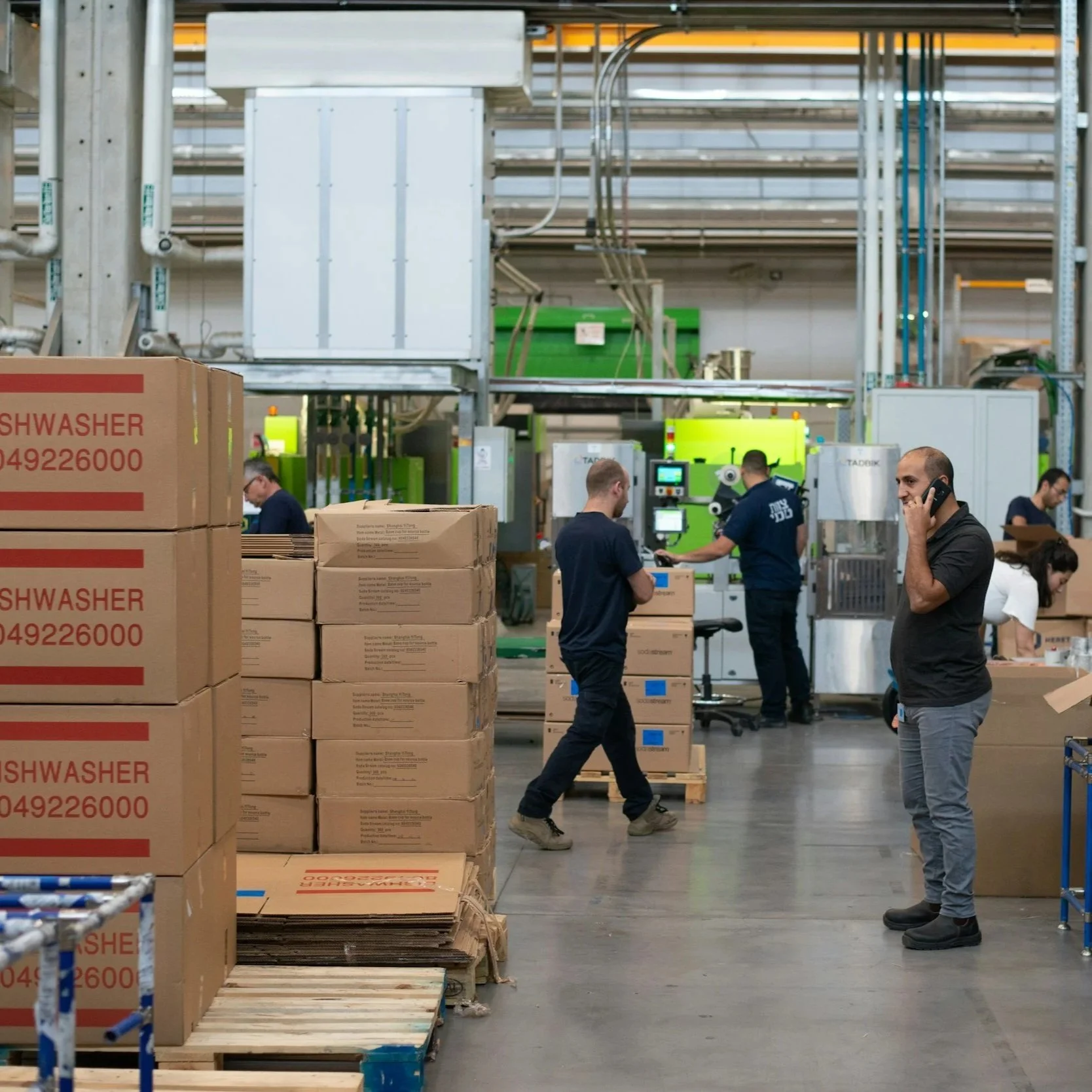
Guard rails reduce the severity of inevitable human error by creating physical separation that absorbs impact and redirects equipment away from workers and assets.
Warehouse guard rails form a foundational safety layer in facilities where people, machinery, and materials constantly share space. Forklifts, reach trucks, pallet jacks, and carts operate under tight timelines, often navigating narrow aisles and congested staging zones. Guard rails reduce the severity of inevitable human error by creating physical separation that absorbs impact and redirects equipment away from workers and assets. Painted lines and signage may guide behavior, but physical barriers provide real protection when attention slips. Professionally planned guard rail systems support safer workflows while allowing warehouses to maintain speed and productivity.
Understanding Where Guard Rails Are Required
Guard rail placement depends on how a warehouse actually functions rather than how it looks on a layout drawing. High-risk areas often include forklift travel lanes adjacent to pedestrian walkways, intersections with limited visibility, and staging zones near dock doors where traffic patterns overlap. Rack aisles experience repeated exposure during turning, load placement, and pallet retrieval. Infrastructure zones housing electrical panels, network equipment, fire controls, or compressed air systems also require protection. Professional evaluations observe real movement patterns, congestion points, and near-miss history to identify where barriers add the most value.
Pedestrian Protection in High-Traffic Warehouses
Pedestrian movement presents one of the most persistent safety challenges in warehouse environments. Employees walk between picking zones, offices, break areas, and loading docks while equipment moves nearby under load. Guard rails establish defined walkways that remove guesswork for both pedestrians and operators. Physical separation reduces sudden stops, hesitation, and unpredictable movement that often lead to accidents. Well-designed pedestrian protection improves worker confidence and supports a calmer, more controlled environment even during peak shifts.
Rack Protection And Inventory Preservation
Warehouse racking systems carry substantial weight and represent a major financial investment. Even low-speed contact from forklifts can weaken uprights, shift beams, or compromise anchoring over time. Guard rails installed at rack ends and along high-exposure aisles absorb impact before structural damage occurs. Protecting racks also protects inventory from collapse, damage, or contamination. Professional rack protection strategies consider aisle width, lift height, equipment type, and turning radius to reduce cumulative damage that may otherwise go unnoticed until failure occurs.
Equipment And Infrastructure Safeguards
Critical infrastructure often sits within active traffic zones due to space constraints. Electrical panels, conveyor motors, control cabinets, data systems, and building columns cannot tolerate repeated impact. Guard rails create buffer zones that prevent accidental contact while still allowing maintenance access. Damage to infrastructure frequently leads to extended downtime rather than simple repairs. Professional planning prioritizes these assets to protect operational continuity and reduce unplanned shutdowns.
Types Of Warehouse Guard Rail Systems
Warehouse guard rail systems vary in design, strength, and flexibility. Steel guard rails provide high impact resistance for heavy forklift zones and loading areas. Modular systems allow facilities to adjust layouts as operations change or expand. Floor-mounted rails anchor directly into concrete slabs for maximum stability, while surface-mounted options suit retrofit applications. Some systems include energy-absorbing components that reduce transmitted force. Professional selection focuses on matching system performance to operational demands rather than choosing a one-size solution.
Impact Ratings And Performance Expectations
Impact ratings help determine how much force a guard rail system can withstand before failure. Facilities operating heavy forklifts at higher speeds require higher-rated systems than slower-paced distribution centers. Load weight, travel frequency, and operator visibility all influence realistic impact scenarios. Professional assessments calculate likely collision forces based on daily operations instead of relying solely on manufacturer specifications. Aligning performance expectations with real conditions improves reliability when incidents occur.
Guard Rail Height And Visibility Considerations
Guard rail height affects both protection capability and operator awareness. Rails must stand tall enough to intercept forklift frames, forks, or pallet loads before contact occurs. Visibility remains equally important, particularly at intersections and cross aisles. Bright safety colors increase contrast and reinforce traffic separation across the facility. Low-profile rails may suit pedestrian walkways, while taller rails protect racks and machinery. Professional layouts coordinate rail height with equipment dimensions and sightlines to avoid blind spots.
Anchoring And Installation Standards
Anchoring quality determines whether guard rails perform under real-world impact. Concrete slab thickness, reinforcement, age, and condition influence anchor selection and spacing. Improper installation often results in anchors pulling free during collisions, rendering rails ineffective. Professional installers evaluate slab specifications before drilling or mounting. Correct anchor alignment, spacing, and torque application support long-term performance under repeated stress.
Compliance With Safety Standards And Regulations
Warehouse safety regulations emphasize protecting employees from struck by hazards and maintaining safe travel paths. While standards may not dictate specific guard rail designs, facilities must demonstrate effective risk mitigation. Guard rails provide a widely accepted method for separating people from mobile equipment. Professional installation aligns systems with documented safety objectives and inspection expectations. Clear records also support insurance reviews and risk management programs.
Integration With Warehouse Traffic Flow
Guard rails must complement warehouse traffic flow rather than obstruct it. Poor placement can restrict turning space, create bottlenecks, or reduce visibility at intersections. Professional planning evaluates forklift routes, staging patterns, and peak traffic periods before final placement. Integrated systems guide movement naturally and reinforce safe behavior. Thoughtful layouts improve efficiency while strengthening protection.
Durability In Demanding Industrial Environments
Industrial warehouses expose guard rails to vibration, abrasion, and environmental stress. Quality coatings protect steel from corrosion caused by moisture, temperature changes, and cleaning processes. Material thickness and weld integrity influence how systems withstand repeated contact. Routine inspections help identify wear before performance declines. Professional-grade systems tolerate demanding use without frequent repair or replacement.
Retrofit Versus New Construction Installation
Installing guard rails in existing warehouses presents different challenges than new construction projects. Retrofit installations must adapt to existing slabs, layouts, and workflows without disrupting productivity. New construction allows early integration into traffic planning and foundation design. Professional services adjust installation methods to minimize downtime. Early assessments support smoother implementation regardless of project type.
Protecting Automated And Robotic Systems
Automation continues to reshape warehouse operations through robotic picking systems and automated guided vehicles. These systems still require physical protection from manual equipment and structural hazards. Guard rails help define lanes and separate automated paths from pedestrian and forklift traffic. Physical barriers reduce downtime and repair costs associated with accidental contact. Professional planning integrates automation routes alongside traditional traffic patterns.
Maintenance Planning and Long-Term Performance
Guard rails require ongoing evaluation to maintain effectiveness. Impacts may bend components or loosen anchors without obvious visual damage. Scheduled inspections identify issues early and support consistent safety performance. Professional maintenance programs help facilities plan repairs predictably. Long-term planning keeps systems aligned with operational changes and growth.
Cost Considerations And Return On Investment
Guard rail installation represents a proactive approach to warehouse risk management. Preventing injuries, reducing equipment damage, and avoiding downtime contribute to measurable long-term savings. Facilities that delay installation often face higher costs following incidents. Professional solutions emphasize meaningful risk reduction rather than minimal compliance. Strategic investment supports safer operations and financial stability.
Customization For Unique Warehouse Layouts
Every warehouse operates differently based on product type, equipment mix, and workflow. Standard layouts rarely address all exposure points effectively. Custom guard rail configurations adapt to real movement patterns and space constraints. Professional providers design systems that fit operations rather than forcing operational changes. Customization improves adoption and overall effectiveness.
Professional Assessment Versus Assumptions
Assumptions about safety risks often overlook gradual changes in traffic behavior and workflow. Professional warehouse assessments identify near misses, congestion zones, and evolving exposure points. Data-driven placement delivers stronger protection than reactive fixes. Expert insight supports informed decision-making and continuous improvement. Professional evaluations strengthen safety culture and operational confidence.
Planning For Operational Growth And Change
Warehouses evolve as inventory volume increases, staffing changes, or processes shift. Guard rail systems should support future expansion without major reconstruction. Modular designs and adaptable layouts allow phased growth. Professional planning anticipates change and reduces future disruption. Forward-thinking design protects both current and future operations.
Frequently Asked Questions About Warehouse Guard Rail Systems
where are guard rails most commonly required in warehouses?
Guard rails are most commonly installed along pedestrian walkways, near loading docks, around racking systems, and in front of critical infrastructure such as electrical panels or structural columns. Areas with heavy forklift traffic benefit greatly from physical separation that reduces collision risks and improves overall safety.
are steel guard rails better than plastic alternatives?
Steel guard rails provide significantly higher impact resistance and longer service life in heavy-duty warehouse environments. While plastic systems may be suitable for light-duty zones, they often lack the strength required to withstand repeated forklift impacts and high-speed material handling.
how often should warehouse guard rails be inspected?
Most warehouse facilities benefit from annual guard rail inspections to confirm proper alignment and structural integrity. Additional checks are recommended after known impacts, especially in high-traffic zones where frequent contact can gradually compromise performance.
do guard rails interfere with forklift operations?
Properly planned guard rail installations actually improve forklift operations by clearly defining travel paths and protected areas. Poor placement can create bottlenecks or blind spots, which is why professional layout planning is essential to maintain efficiency and safety.
are guard rails required by safety regulations?
Safety regulations generally focus on hazard mitigation rather than mandating specific products or systems. Guard rails are widely recognized as an effective method for protecting workers, equipment, and infrastructure in warehouse environments, making them a common compliance solution.
Sereno Custom Fence & Gates offers a complete, one-stop solution for professional metalwork services in the Phoenix area, including mobile welding, handrails, guard rails, and trash enclosures. Our skilled and certified technicians work with high-quality materials to deliver durable, safe, and visually appealing solutions with a focus on quality, reliability, and long-term performance. Whether you need custom metal installations or repairs, we provide affordable, transparent pricing and trusted workmanship. Contact us today and enhance your property with secure, professionally crafted metalwork.
